Puffins in Vík: Best Spots and When to See Them
Vík is one of the most accessible places in Iceland to see puffins up close. The cliffs at nearby Dyrhólaey put you within a few metres of nesting birds, and the dramatic setting of Reynisfjara beach adds a black-sand backdrop that exists nowhere else on earth. This guide covers the specific spots, access details, current safety situation, practical logistics, and photography.
For the full breakdown of puffin season timing, month-by-month activity, and other locations across Iceland, see our puffin season guide.
The short version on timing: puffin season at Vík runs mid-April through mid-August. June and July are peak. September the cliffs are empty.
The two main puffin spots near Vík
Dyrhólaey is the best spot. This headland sits about 18 kilometres west of Vík village, accessible via a turn off the Ring Road. The puffins nest in burrows across the top of the promontory, particularly around the lighthouse area. I have photographed puffins at Dyrhólaey many times, in every weather the south coast produces. June and July are the months to go: the wildflowers are out across the headland, the daylight runs past midnight, and the birds are at full activity. What always strikes me is how unbothered they are. They just mind their own business, flying out to fish and coming back in waves, completely uninterested in the people watching them. Once I was there with my daughter and they landed all around her, going about their routines as if she was not there.
Rope barriers now protect the nesting areas on the clifftop, so you cannot walk right up to the burrows. You do not need to. Find a good position near the ropes, stay still, and the birds will fly past you and land just beyond. The barrier is about protecting the nests, not keeping the birds away from you. My preferred spot is the area between the upper car park and the lighthouse itself. It is open ground, the birds are active all around you, and you have a clear view of the flight lines coming in off the ocean.

Reynisfjara beach sits below the puffin colony at Reynisfjall, the black basalt cliff east of the beach. From the beach you can see birds flying in and out of the cliff face above, and the Reynisdrangar sea stacks stand offshore in the surf. Read the safety section below before visiting Reynisfjara.
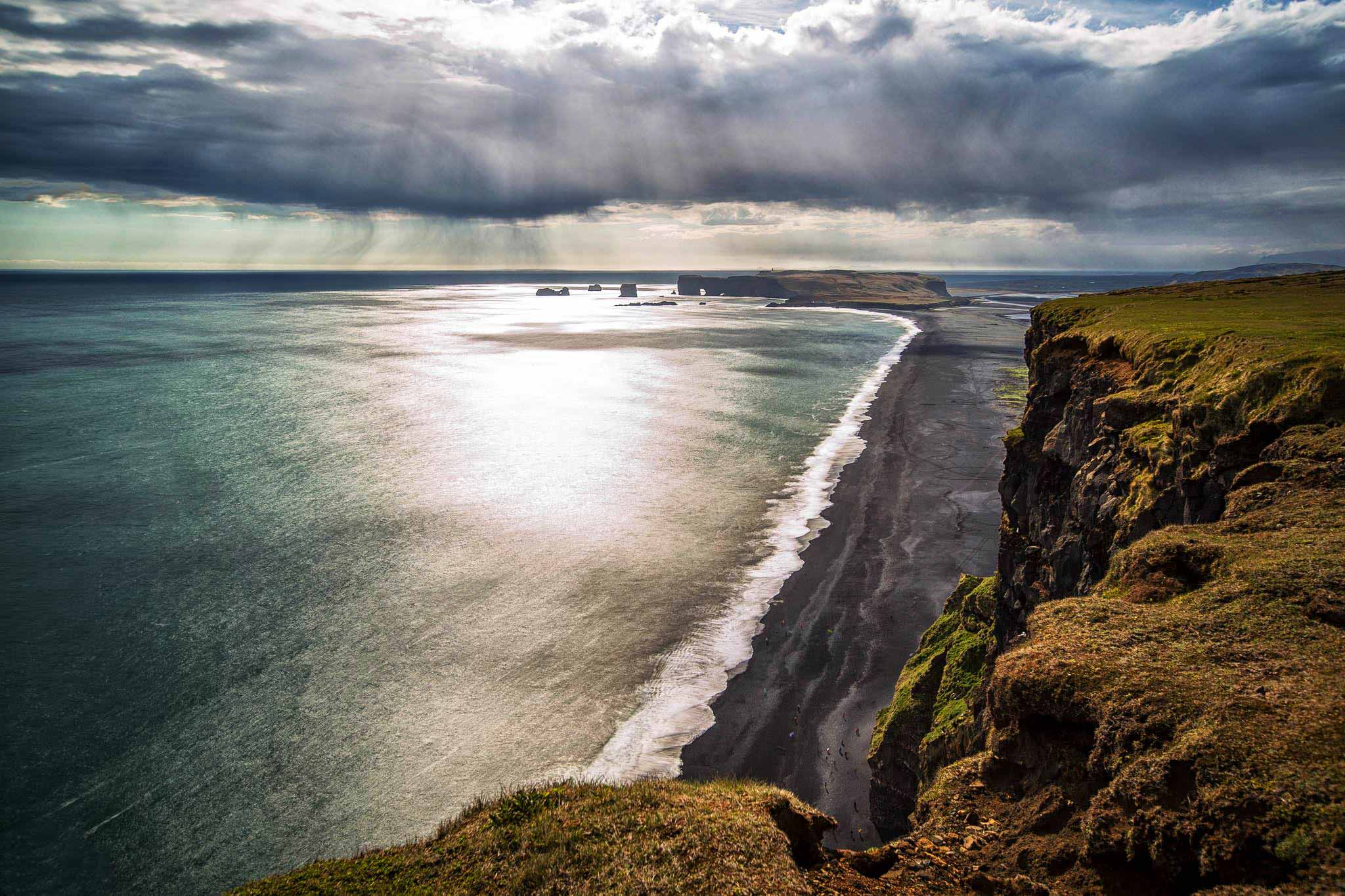
Reynisfjara is part of the broader south coast route and easy to combine with Seljalandsfoss and Skógafoss in a single day.
Practical information before you go
Parking and entry: Both car parks at Dyrhólaey are free. There is no entry fee to access the headland. The lower car park sits near the rock arch at sea level. The upper car park is by the lighthouse and gives you immediate access to the puffin area. There are toilet facilities on site.
Nesting season access hours: From mid-May through late June, the Environment Agency of Iceland restricts access to protect breeding birds. During this period the upper area is only open from 9am to 7pm. Outside those hours the upper road is closed and the upper car park is inaccessible. The lower area remains open. When restrictions are in force, you can walk up from the lower car park on foot during the open hours.
Crowds: Dyrhólaey gets busy in June and July, particularly midday when tour buses from Reykjavik arrive. If you are going purely to watch puffins, midday is fine and the birds are active regardless of how many people are there. If you want the headland quieter, go early in the morning (outside nesting restriction hours) or in the evening after the tour groups have left. Evening also gives you the best light for photography.
Best time of day at Dyrhólaey
The birds are there throughout the day. Midday in clear summer light is a fine time to visit if you simply want to see puffins. They come and go constantly and you will not be short of activity.
If photography is your priority, evening is a different matter. The warm low light from around 8pm onward hits the orange beak and the black and white of the bird in a way that midday cannot match. In June the sun is still well up at midnight. If you just want to watch puffins with your family, midday works perfectly. If you are shooting seriously, plan for evening.
Reynisfjara: current situation and safety
Reynisfjara has changed significantly and the situation is serious. A 9-year-old child died at the beach in August 2025, swept out by a sneaker wave. This was the sixth fatality there since 2007. A major landslide and coastal erosion event followed in early 2026, cutting off the Hálsanef cave area. As of 2026, that section of the beach is inaccessible.

The beach now operates a physical traffic light warning system at the entrance:
A yellow light means moderate hazard. Stay at least 30 metres from the water.
A red light means severe hazard. The beach is closed and a gate blocks access. The red warning is now active significantly more often than in previous years following updated safety criteria from the Icelandic Tourist Board.
The core rules have not changed: do not turn your back on the ocean. Do not walk close to the waterline. Do not let children near the water's edge. Sneaker waves arrive without warning from a sea that looks calm. Check the warning light before entering the beach. If it is red, do not go in.
Photographing puffins at Dyrhólaey
I shoot handheld at Dyrhólaey about 90 percent of the time. The birds move fast and positions change quickly. A tripod locks you in. You need to be able to pivot and react when a bird suddenly lands two metres to your left.
Two situations require completely different approaches.
Birds in flight: Speed is everything. Use at least 1/1000s, faster if the light allows. The challenge is depth of field: a puffin in flight is an unpredictable target, and if you are wide open at f/2.8 you will lose the bird to blur or miss focus by a few centimetres. Stopping down to f/5.6 or f/8 gives you a wider focus window and keeps more of the bird sharp. The trade-off is that you need to push ISO higher to maintain that shutter speed, especially in the flat grey light the south coast often delivers. Do not be afraid of ISO 1600 or 3200. Noise is recoverable. A blurred puffin is not. Use continuous autofocus and burst mode. Expect a low keeper rate and shoot a lot.
Birds near the rope barriers: When they land and sit, everything changes. A 70-200mm lens gives you enough reach and is comfortable to handhold for long periods. If you want to isolate one bird sharply against a blurred background, open up. If you want the ocean or the headland behind the bird to remain recognisable, stop down. Neither choice is wrong. It depends on what you are after. At f/4 you get a beautiful separation between bird and background. At f/8 you can show the bird in its environment. Try both while you have them sitting still. The evening light at Dyrhólaey in summer is genuinely exceptional: warm and low, hitting that orange beak against the black and white of the bird. You cannot manufacture that in editing. You have to be there at the right hour.
Combining Vík puffins with the south coast

Vík is the natural endpoint of a classic south coast day route from Reykjavik. Rough distances: Reykjavik to Seljalandsfoss is about 120km, Seljalandsfoss to Skógafoss another 30km, Skógafoss to Vík another 30km. Dyrhólaey is 18km further west of Vík.
A single well-timed day is enough to see puffins properly. Staying overnight in Vík gives you a second evening if conditions are not right the first night, and the village itself is worth the time.

Frequently asked questions
When is puffin season at Vík?
Mid-April through mid-August, with June and July as peak. See the full puffin season in Iceland guide for month-by-month detail.
What is the best spot to see puffins near Vík?
Dyrhólaey promontory, about 18km west of Vík. The area between the upper car park and the lighthouse gives you direct access to the nesting colony and open flight lines. Reynisfjara beach is the second option, with a more dramatic setting, but read the current safety situation before you go.
Is there a fee to visit Dyrhólaey?
No. Both car parks are free and there is no entry fee.
What time of day are puffins most active?
They are active throughout the day. Midday in clear summer light is good for watching. Evening from around 8pm gives warm directional light that matters significantly if you are photographing.
Can I touch puffins in Iceland?
No. They are wild birds on active nests. Approach slowly, stay near the rope barriers, and wait. They will come close on their own terms.
Is Reynisfjara safe to visit?
Open but with significant restrictions. Traffic light at the entrance: yellow means stay 30 metres from the water, red means the beach is closed. The Hálsanef cave area is not accessible as of 2026. Follow the warning system and do not enter when the light is red.
How do I get to Dyrhólaey from Vík?
Drive about 18km west on the Ring Road (Route 1) and turn at the Dyrhólaey sign. Two car parks: lower near the rock arch, upper by the lighthouse. During nesting season (mid-May through late June) the upper area is only open 9am to 7pm. If the upper road is closed, walk up from the lower car park on foot.
How crowded does Dyrhólaey get?
It gets busy midday in June and July when day tours from Reykjavik arrive. For a quieter visit, go in the evening after tour groups have left. Evening also gives you the best photography light.
Are puffins guaranteed in June and July?
The colony is established and returns each year. You will see puffins at Dyrhólaey in June and July. The main variable is weather: fog or rain reduces visibility but the birds are still there.
What camera settings work best for puffin photography?
For birds in flight: 1/1000s minimum shutter speed, f/5.6 to f/8 for depth of field, push ISO as needed, continuous autofocus and burst mode. For birds sitting near the barriers: 70-200mm lens, open up for background separation or stop down to include the landscape. Shoot handheld so you can react quickly. Evening light between 8pm and midnight in June produces the best results.